About the barn
Nearly five centuries under one roof
“History lingers softly here, in every stone, every tree, linking Poppleton’s past to its present.”
The story so far
A tithe barn, still gathering people
The barn was built in the mid-16th century, and some of its timbers have been dated to 1542. Originally it stored the produce paid as a tax to the Manor: a tithe, one tenth of a tenant’s income. It later became a threshing barn, and in the 20th century a store for hay and potatoes.
The timber-framed barn was once twice the length it is today, until fire destroyed part of it in 1928. The brickwork was added in the 18th century. By 1989 it was in disrepair and listed as a Grade II “Building at Risk”. Restoration began in 1994 and was completed in July 2000, and the barn has welcomed weddings, fairs, exhibitions and village life ever since.
- 1542Timbers felled for the barn
- 1644Prince Rupert’s troops, before Marston Moor
- 1928Fire destroys half the barn
- 1989A listed building at risk
- 2000Restoration completed
- 2004The Tudor Garden is planted
The English Civil War
“Rupert’s Barn”
The barn is still known locally as Rupert’s Barn. On the eve of the Battle of Marston Moor, on 2 July 1644, Prince Rupert of the Rhine, nephew of King Charles I and a leading Royalist commander, is believed to have quartered his forces here after crossing the river nearby.
On television
The Time Team visit
Channel 4’s Time Team, with Tony Robinson, came to explore the mounds that encircle the Manor Farm area: the site of the original Anglo-Saxon village of Nether Poppleton.
Watch the episode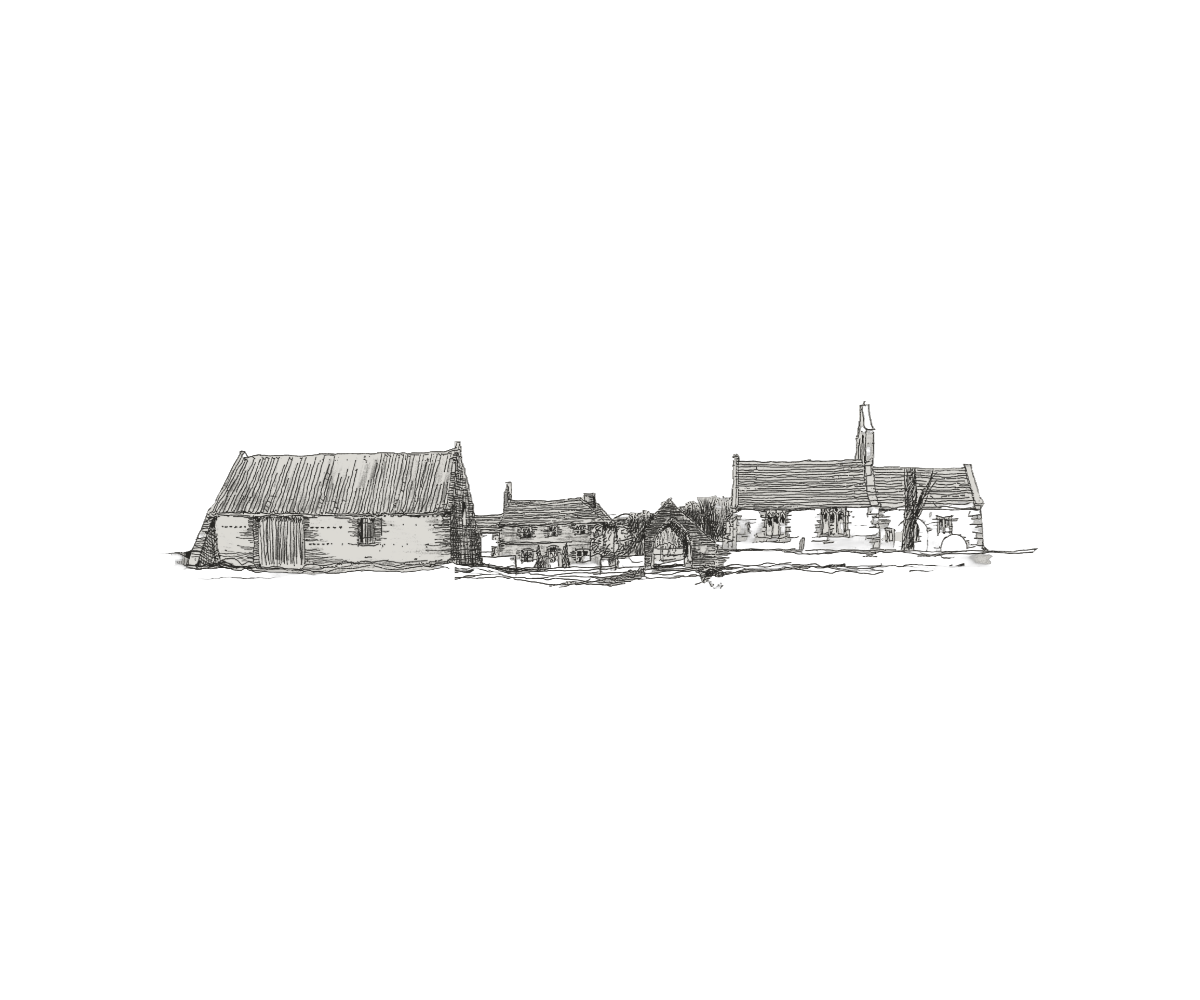
The barn, the old farmhouse and St Everilda’s, side by side
The setting
A green corner of old Poppleton
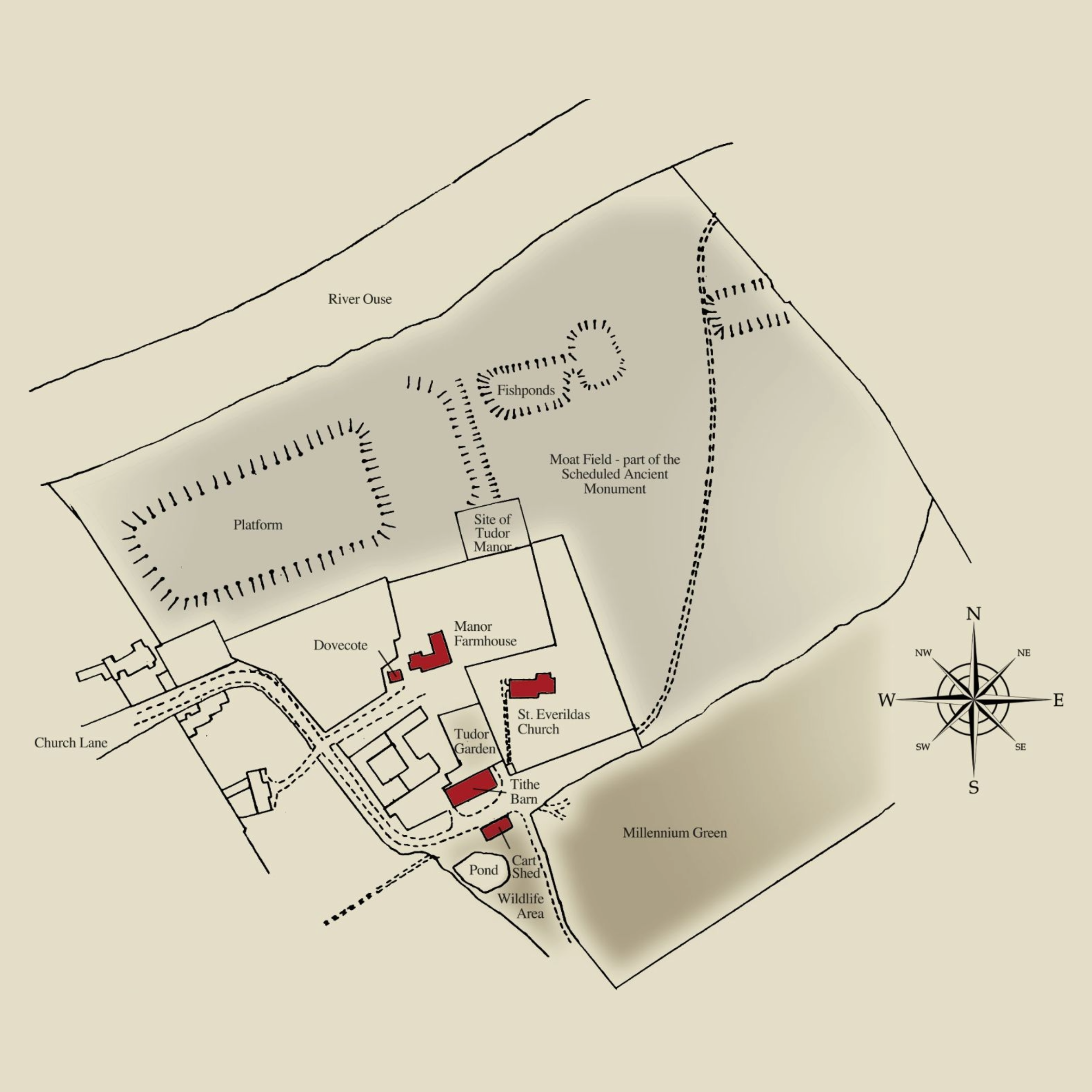
The barn sits within a conservation area of old farm buildings, an ancient church, gardens and green spaces, all cared for by the village.
Saved for the village
The Conservation Area
The old farm buildings and lanes of Manor Farm, protected for good.
Thirteen centuries of worship
St Everilda’s Church
One of only two churches in England dedicated to St Everilda.
A quiet place to pause
The Tudor Garden
Herbs, flowers and stone paths beside the barn, tended by volunteers.
A haven for nature
The Wildlife Area
A restored cart shed and pond, now a sanctuary and outdoor classroom.
Orchards, sculpture and Apple Day
The Millennium Green
Fruit trees, Steve Blaylock’s sculptures and the Scouts’ Apple Day.
Finding us
Church Lane, Nether Poppleton
- By train
- Poppleton station is an easy 15-minute walk, on the York to Harrogate and Leeds line: 6 minutes from York, 30 from Harrogate and an hour from Leeds.
- By bus
- The No 10. The closest stop is by the Lord Nelson pub at the end of Church Lane.
- By car
- Free parking on site. Tithe Barn, Church Lane, Nether Poppleton, York YO26 6LF.
Kind words
“I could not fault the Tithe Barn as a venue for my special day; the setting was simply breathtaking. … Nothing was too much trouble for them, as they went above and beyond to ensure we had the most memorable day possible.”
A Tithe Barn bride
Ready to book?Saved for the village
The Conservation Area
In 1989 the old house and farm buildings of Manor Farm were no longer needed for agriculture, opening a new chapter in their long history.
Over the years that followed, the Poppleton Preservation Group, supported by local residents and public bodies, worked tirelessly to protect the site from unsuitable redevelopment, with a shared vision of keeping its historic character and rural calm for future generations.
Thanks to their dedication, Manor Farm remains a cherished part of the village. Its peaceful lanes, green spaces and traditional buildings are now safeguarded within the Conservation Area and the Green Belt.
Thirteen centuries of worship
St Everilda’s Church
St Everilda’s Church has been a place of worship for more than thirteen centuries. Surrounded by green fields and village lanes, its story is woven together with that of one of England’s earliest saints.
St Everilda, or Everild, was a 7th-century noblewoman who turned away from royal life to follow a spiritual calling. Tradition tells that she led a community of women here, devoted to prayer and service. It is one of only two churches in England dedicated to her.
Its Norman doorway, from the 11th or early 12th century, still welcomes visitors. Inside, soft light falls on medieval stonework, simple wooden pews and gentle Victorian touches. Outside, the churchyard is a peaceful haven of ancient trees and time-worn gravestones, where the village still gathers in moments of joy and remembrance.
A quiet place to pause
The Tudor Garden
Tucked beside the barn, the Tudor Garden was planted in 2004 in the spirit of traditional Tudor gardens, with symmetry, texture and seasonal colour.
Herbs, flowers and native plants fill the air with gentle fragrance, while stone paths and sheltered corners invite quiet reflection. Carefully tended by volunteers, it is a living link to the past and a lovely place to pause on a visit to the barn.
A haven for nature
The Wildlife Area
In 1994 the Poppleton Wildlife Trust set out to bring a forgotten corner of the village back to life, restoring the 19th-century cart shed and turning the derelict land around the old pond into a wildlife sanctuary.
Today it is a peaceful refuge for birds, insects and native plants, and an outdoor classroom for local schoolchildren: proof that neglected spaces can be restored for wildlife and people alike.
Orchards, sculpture and Apple Day
The Millennium Green
Fruit trees flourish here, a gentle reminder of the orchards of Poppleton’s farming past. Each year the Poppleton Scouts celebrate Apple Day, a cherished tradition that brings the village together.
Among the trees stand four striking metal sculptures by artist Steve Blaylock, celebrating the village’s connection to nature and craft.
In the late 1990s a successful bid to become one of the UK’s 500 Millennium Greens extended the area for everyone to enjoy, completing a green corridor that wraps around St Everilda’s Church and the Manor Farm site.