Nearly Five Centuries Under One Roof
5TH AUGUST 2026 · 4 MIN READ · THE TITHE BARN
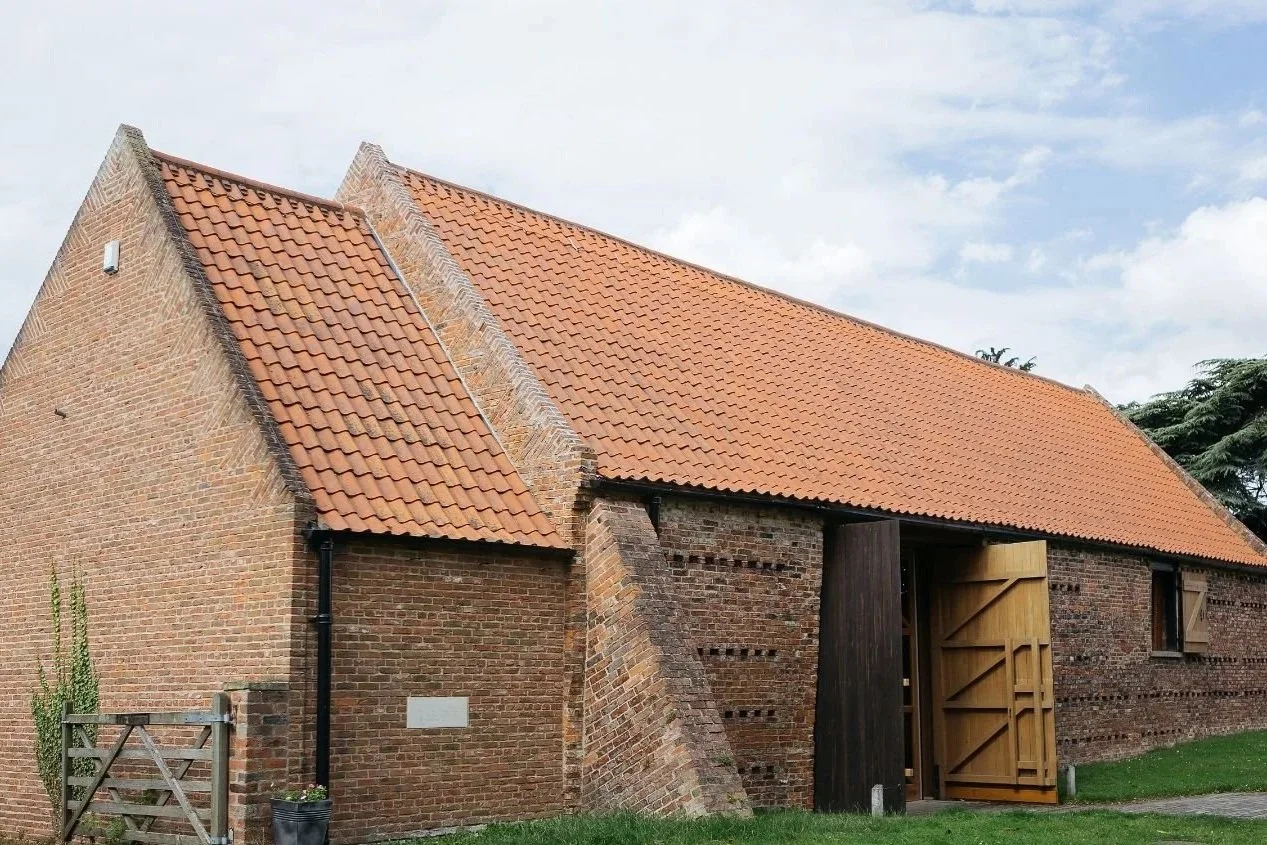
The Tithe Barn Poppleton, close to five hundred years old.
Some buildings simply hold the weather off. Others hold time itself. Stand inside the Tithe Barn on a quiet afternoon, with the light falling through the old timbers, and you are standing where Yorkshire life has gathered for close to five hundred years.
This is the story of how our barn came to be, and why it still feels like a place where things of consequence happen. The Tithe Barn rose out of one of the great upheavals of English history, and its timbers have been precisely dated to the winter of 1542, in the years just after the Dissolution of the Monasteries.
A barn born of change
The Tithe Barn rose out of one of the great upheavals of English history. Its timbers have been precisely dated, through the growth rings in the wood, to the winter of 1542, which places its building in about 1543, in the years just after the Dissolution of the Monasteries under Henry VIII. As the old monastic estates passed into new hands, the Lawson family of York took on the Manor at Poppleton, and it was most likely they who raised the barn. In time the manor passed to the Hutton family, a line that gave the country two Archbishops of York.
The barn was built for a very particular purpose, and its name still tells you what that was. A tithe was one tenth of a tenant's income, owed each year to the church. That tenth was often paid not in coin but in kind, in grain, in hay, in the produce of the land, and a great barn like this one was where it was gathered in, counted, and stored. Every sheaf that came through these doors was a small act of a much older economy, and the building was made grand enough to honour it.
Every sheaf that came through these doors was a small act of a much older economy.
Twice the barn it is today
It is worth knowing that what stands now is only part of what once stood here. The original barn was roughly twice its present length, a truly vast timber-framed structure. Brick additions were made in the eighteenth century, and much later, in 1928, a fire took away a good portion of the building. Over the centuries its working life changed with the times: from a tithe store to a threshing barn, and on into the twentieth century as a humble store for hay and potatoes. Grand beginnings, honest middle years.
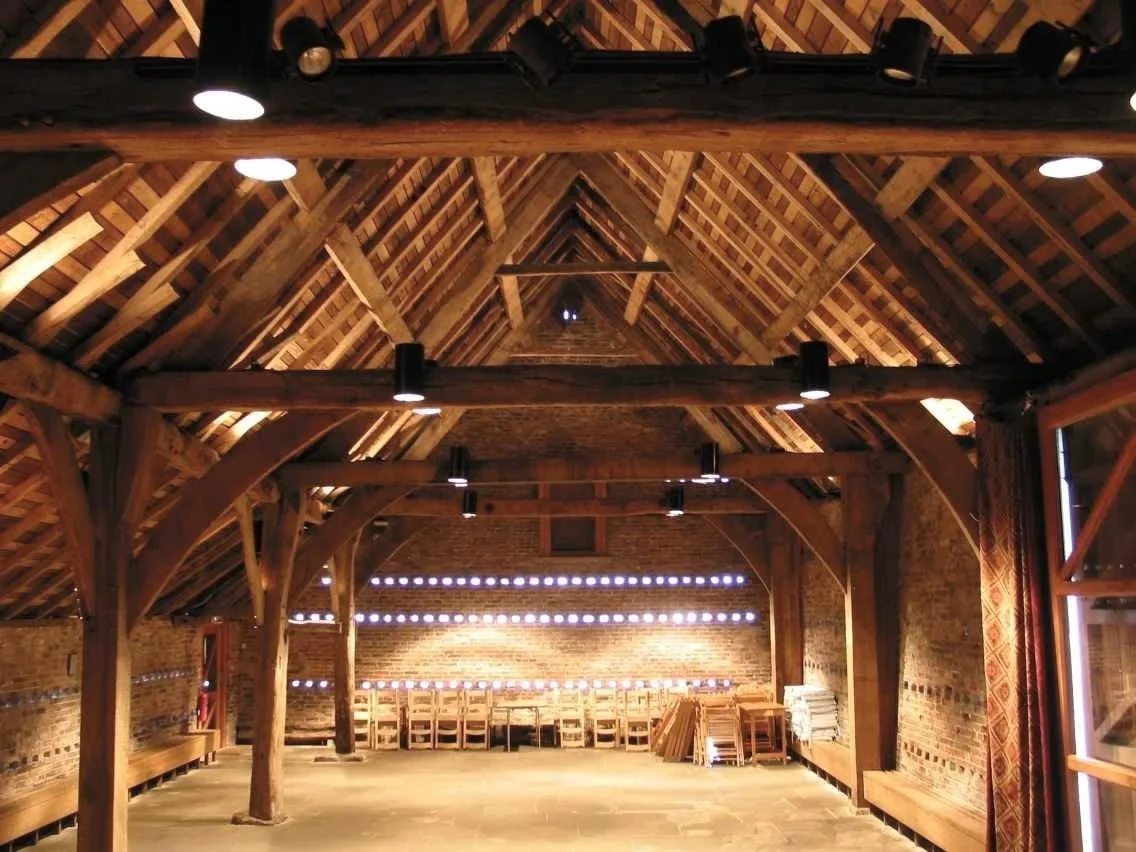
Characterful Interiors
The night before Marston Moor
For all its agricultural calm, the barn has brushed against high drama. During the English Civil War it earned the name “Rupert's Barn,” after Prince Rupert of the Rhine is said to have quartered some of his troops here overnight on the first of July 1644, the eve of the Battle of Marston Moor. That battle, fought just a few miles away the following day, was one of the largest ever on English soil and a turning point of the war.
The barn's part in the nation's story did not end there. On the first of January 1660, Lord Thomas Fairfax gathered a large company of Yorkshire gentlemen at the Tithe Barn before marching into York, a moment that played into the events leading to the Restoration of the monarchy. For a farm building near a small village, it has kept remarkable company.
Older still: saints and settlements
The barn does not stand alone. Around it lie the gentle mounds of a much older Anglo-Saxon settlement, ground so rich in history that Channel 4's Time Team came to investigate it. Close by is St Everilda's Church, whose Norman doorway dates from the early twelfth century, and whose story reaches back further still: St Everilda is believed to have come from St Hilda's abbey at Whitby around the year 700 to found a religious community here. Layer upon layer, this small corner of Poppleton has been a gathering place for well over a thousand years.
“This small corner of Poppleton has been a gathering place for well over a thousand years.”
Saved for the future
By 1989 the barn was Grade II listed but sadly recorded as a “Building at Risk,” its future far from certain. What happened next is a story of community as much as conservation. A restoration was begun in 1994 and completed in July 2000, giving the barn back its strength and its dignity. The effort was recognised with the Duke of York's Community Award, and Prince Andrew visited in December 1999 to see the work first-hand. In 2004 a Tudor Sensory Garden was created behind the barn, and the surrounding wildlife area and Millennium Green have been quietly tended alongside it.
Today the Tithe Barn is cared for by the Friends of Poppleton Tithe Barn, a registered charity, and it has found a new and fitting purpose. The building that once gathered in the harvest now gathers in people, for weddings and celebrations, art fairs and concerts, and all the ordinary and extraordinary occasions of local life.
Come and stand in the history
There is something rare about a room that has held so much. When you hire the barn, or simply visit on an open day, you become part of a story that began before the reign of Elizabeth I. The beams above you have watched over harvests and soldiers, saints' countryside and centuries of celebration. We think that is worth preserving, and worth sharing.
A unique venue for all occasions, and a piece of Yorkshire history you can stand inside.
Come and stand in the history.
Arrange a viewing and picture your occasion in the space. Free parking, easy access, and a warm welcome.
Enquire about hire